

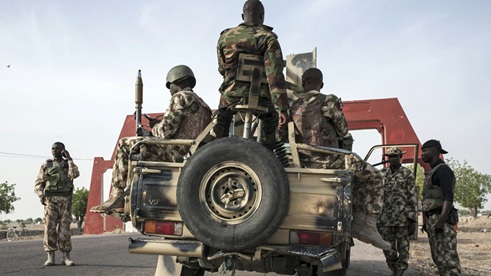
The Nigerian Army has clarified that an Amnesty International report alleging the deaths of detainees, including children, at Giwa Barracks in Maiduguri, Borno State, relates to events recorded in 2016 and should not be interpreted as a recent development.
The clarification followed the recent circulation of the Amnesty report on social media and other online platforms, where its historical context was reportedly omitted, potentially creating the impression that the deaths occurred under current conditions at the military detention facility.
In a statement issued on Sunday, the Headquarters of the Joint Task Force, North-East, Operation Hadin Kai, said the Amnesty International report was originally published in May 2016.
The Acting Military Information Officer of the task force, Captain Mohammed Goni, said the figures contained in the report referred specifically to alleged deaths recorded between January and May 2016.
“For clarity, the Amnesty International report was published in May 2016 and the figures contained therein relate to alleged deaths recorded between January and May of that year,” the statement said.
The Army acknowledged that the report represented Amnesty International’s account of events at the time but stressed that it should not be presented as evidence of current conditions at Giwa Barracks in 2026.
Amnesty International’s 2016 findings had alleged that at least 149 people, including children and babies, died in military detention at Giwa Barracks between January and May of that year. The organisation attributed the deaths to conditions it described as severe overcrowding, inadequate food and water, poor sanitation and insufficient medical care.
The human rights organisation said it could not independently establish the precise cause of every death, but reported that witnesses identified starvation, dehydration and disease associated with overcrowding as possible contributing factors.
The historical report formed part of Amnesty International’s wider documentation of alleged human rights abuses in military detention facilities during Nigeria’s campaign against Boko Haram insurgency.
The Army’s latest statement, however, focused on preventing the old report from being mistaken for a report about current events.
Operation Hadin Kai said the Joint Investigation Centre at Giwa Barracks currently operates according to Nigerian laws, established procedures and applicable international standards.
According to the task force, the facility places emphasis on the welfare and lawful treatment of detainees and provides access to necessary care, rehabilitation programmes, skills acquisition and vocational training. It also said detainees have access to Western and Islamic education.
The military further stated that the centre maintains engagement with relevant humanitarian and human rights organisations. It added that national and international media organisations had been granted access during 2026 to observe its activities and prevailing conditions.
The clarification comes at a time when reports concerning deaths in custody have attracted renewed public attention in Nigeria following the deaths of 37 suspected illegal miners in NSCDC custody in Niger State. The Federal Government has constituted an independent 10-member committee to investigate those deaths, including the circumstances of the arrests, detention conditions and cause of death.
Against that background, the Army urged journalists, social media users and members of the public to verify the dates and context of sensitive security and humanitarian reports before sharing them.
Operation Hadin Kai specifically advised media organisations to clearly distinguish archival reports from current developments, saying failure to do so could create unnecessary public apprehension.
The clarification does not erase the historical allegations documented by Amnesty International. Rather, the Army’s position is that those allegations concern events from 2016 and should be reported as such.
The distinction is particularly important in the digital information environment, where old reports can quickly circulate as though they describe current events. The Army therefore called for greater care in reproducing historical material concerning security operations, detention facilities and alleged human rights violations.
Operation Hadin Kai concluded by reaffirming its stated commitment to professional conduct, respect for applicable laws and standards, and continued improvement in the management and welfare of persons in its custody.