

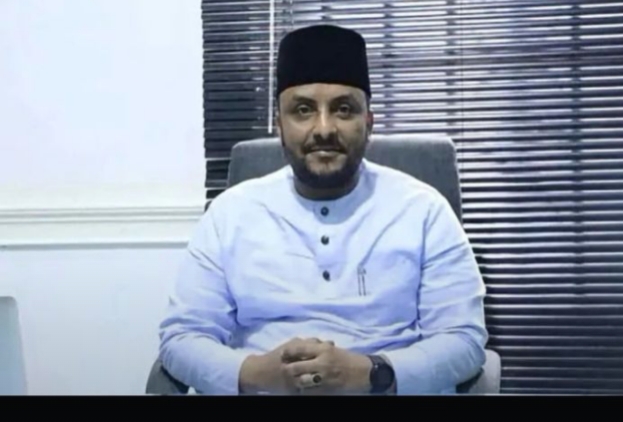
Akor Christian Oche, popularly known as Due Process, has reacted to the restructuring of the All Progressives Congress (APC) Presidential Campaign Council’s media team, following the controversial Channels Television interview involving Alwan Hassan.
Oche described Hassan’s assignment as an exceptionally difficult marketing responsibility, arguing that defending the record of the Tinubu administration before Nigerians who are experiencing economic hardship, insecurity and rising living costs is no easy task.
According to him, the challenge facing government spokespersons goes beyond communication skills or political persuasion. It is about attempting to sell a product whose performance is being questioned by the very people expected to buy it.
He observed that no matter how eloquent, intelligent or persuasive a spokesperson may be, communicating government achievements becomes increasingly difficult when citizens are struggling with the realities of everyday life.
The Channels Television Interview That Changed the Conversation
The controversy followed Hassan’s appearance on Channels Television’s *Politics Today*, where he identified Nigeria’s 112 emergency telephone number as one of the achievements of the Tinubu administration.
In an attempt to demonstrate its functionality, Hassan challenged the programme’s anchor, Seun Okinbaloye, to dial the number live on television.
However, repeated attempts during the broadcast failed to connect, creating an uncomfortable moment for the APC spokesperson and triggering widespread public reactions.
Hassan maintained that the emergency line was operational and suggested that network challenges might have caused the unsuccessful attempts. Interestingly, subsequent reports showed varying experiences, with TheCable later successfully connecting to the Lagos State Emergency Centre.
APC Restricts Official Campaign Spokespersons
Following the controversy, the APC Presidential Campaign Council announced a restructuring of its communication arrangement, restricting official spokesperson responsibilities to Senator Abdulaziz Yari, Dele Alake and Mohammed Idris.
Other previously designated spokespersons, including Hassan, were reassigned to the Directorate of Media and Strategic Communications. Although the timing generated speculation about a connection with the television interview, the official announcement did not expressly identify the interview as the reason for the restructuring.
The Bigger Challenge Is Beyond Alwan Hassan
Reacting to the development, Due Process argued that the real challenge confronting the APC is not necessarily the quality of its spokespersons but the difficulty of convincing Nigerians that their economic and security conditions are improving.
He pointed to the burden of rising food prices, transportation costs, unemployment, insecurity, declining purchasing power and the struggle of ordinary families to meet basic needs.
He argued that Nigerians are increasingly interested in measurable outcomes rather than political explanations and campaign promises.
According to him, a government that wants its spokespersons to communicate its achievements must also ensure that those achievements are visible in the lives of ordinary citizens.
He further maintained that political communication cannot indefinitely substitute for effective governance, insisting that the most convincing campaign message is one citizens can experience in their homes, workplaces, communities and businesses.
The central message of Due Process’s reaction is that marketing becomes difficult when the product itself is under public scrutiny. Alwan Hassan may have faced a difficult assignment, but the bigger responsibility rests with the government to deliver results that speak louder than its spokespersons.
**Akor Christian Oche (Due Process)**
National Youth Leader
Coalition for the Protection of Democracy (COPDEM)