

Abuja, Nigeria. 28th October 2027.
Political economist warns that questions over electoral records could undermine public confidence, urges INEC to explain verification procedures
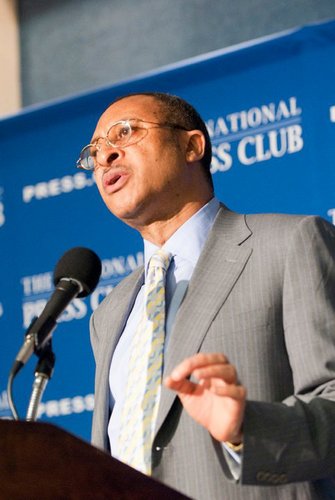
Professor Pat Utomi, a prominent Nigerian political economist, has raised concerns over the credibility of Nigeria’s electoral process following reports of AI-generated images appearing in a register associated with the Independent National Electoral Commission (INEC).
Utomi warned that the reported development raises serious questions about the processes used to verify electoral records, insisting that the commission cannot afford to treat issues capable of affecting public confidence in the electoral system with levity.
In a statement expressing his concerns, Utomi declared: “INEC cannot afford to be careless with the credibility of Nigeria’s electoral process. The presence of AI-generated images in a register meant to support our democracy raises serious questions about verification, transparency and accountability. Our democracy is at stake here!”
His remarks have brought renewed attention to the importance of accurate electoral records, the reliability of voter identification procedures and the responsibility of electoral authorities to ensure that the information under their management meets acceptable standards of integrity.
Questions over INEC’s verification procedures
At the heart of Utomi’s concern is whether the reported presence of AI-generated images reflects a weakness in the procedures used to collect, authenticate and validate information contained in electoral records.
Electoral registers are essential instruments of democratic participation. Their credibility depends not only on the accuracy of names and other identifying information but also on the effectiveness of the procedures used to establish the authenticity of the records they contain.
Where questions arise over the authenticity of images associated with such records, electoral authorities have a responsibility to investigate the circumstances, establish the facts and communicate their findings to the public.
The issue is particularly significant at a time when artificial intelligence tools can generate or manipulate realistic photographs, making it increasingly difficult to distinguish authentic images from synthetic or altered ones through visual inspection alone.
For an institution responsible for administering elections, the challenge is to ensure that technological developments do not create opportunities for inaccurate information to enter official records or weaken the public’s confidence in electoral administration.
Nevertheless, the appearance of an AI-generated image in a register does not automatically establish that the associated voter registration is fraudulent, that the individual concerned does not exist or that the entire register has been compromised. Those conclusions would require independent technical examination and evidence.
Transparency and accountability are essential
Utomi’s warning places the burden of explanation on INEC, which is expected to maintain public confidence in the electoral process through transparent procedures and credible administration.
The commission should clarify the nature of the register in question, identify the circumstances surrounding the reported images and explain the safeguards used to verify the authenticity of images and other identity-related information.
If the images are confirmed to be AI-generated, the public deserves to know how they entered the register, whether the affected records were subjected to further verification and what corrective measures, if any, are being considered.
Such clarification would help distinguish an isolated technical or administrative error from a broader procedural weakness.
It would also provide an opportunity for INEC to demonstrate that its verification systems can identify irregularities and respond appropriately when concerns are raised.
Public confidence in elections depends not on the assumption that errors can never occur, but on the ability of electoral institutions to detect problems, investigate them impartially and correct confirmed deficiencies.
AI presents a growing challenge to electoral integrity
The controversy also highlights a wider challenge confronting election management bodies worldwide: the increasing accessibility of artificial intelligence technologies capable of producing convincing synthetic images and other forms of digital content.





While AI can support administrative efficiency, data processing and the detection of irregularities, it can also be misused to create misleading identity materials, falsify supporting documentation or spread disinformation.
This makes strong verification procedures increasingly important.
Electoral authorities must ensure that digital images are assessed alongside appropriate supporting information and that questionable records are subjected to additional checks where necessary. Technical tools, trained personnel, clear audit trails and established procedures for handling complaints can all contribute to more reliable electoral administration.
At the same time, safeguards must protect legitimate voters from wrongful exclusion or accusations based on unverified suspicions. A credible investigation must establish the facts before conclusions are drawn about individuals or the integrity of a wider database.
Implications for public confidence ahead of future elections
In Nigeria, where the credibility of election administration remains a central issue in public debate, concerns involving electoral records can have consequences beyond the immediate technical question.
If doubts about the accuracy of official records are left unanswered, they may deepen public suspicion and provide grounds for allegations that cannot easily be resolved without access to reliable evidence.
Conversely, a prompt and evidence-based explanation from INEC could help contain speculation, clarify the facts and demonstrate the commission’s commitment to accountability.
The issue therefore requires a response grounded in evidence rather than political assumptions or premature conclusions.
INEC should make clear what it knows, what remains under investigation and what steps it will take if any irregularities are established. Where appropriate, independent technical review could help strengthen confidence in the findings.
INEC urged to take the concerns seriously
Utomi’s intervention is ultimately a warning about the importance of protecting the credibility of the institutions responsible for administering Nigeria’s democracy.
His statement does not, on its own, establish the extent of the reported problem. However, it raises questions that warrant a clear and transparent response from the electoral commission.
The central issues remain straightforward: What register contains the reported AI-generated images? How were the images identified? Were the affected records independently verified? What safeguards exist to prevent similar problems, and what remedial action will be taken if the concerns are substantiated?
These are questions that can be addressed through a transparent investigation and a clear explanation of the relevant procedures.
For a country preparing for future electoral contests, the credibility of the process depends on accurate records, effective verification and institutions willing to account for their decisions.
As Utomi cautioned, the stakes extend beyond the images themselves. The confidence Nigerians place in their electoral institutions is an essential component of democratic participation, and every credible concern about the integrity of electoral records deserves a thorough, impartial and evidence-based response.
INEC’s response will be important in establishing the facts and determining whether the reported images point to an isolated error or a more significant weakness in its verification procedures.