

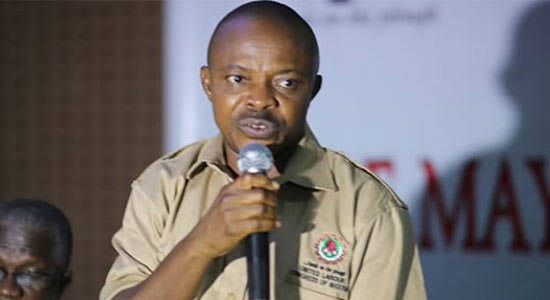
The Nigeria Labour Congress has accused the Federal Government of benefiting from increased oil revenues following the recent surge in international crude prices while Nigerian workers and other citizens face rising transportation costs, food prices and declining purchasing power.
NLC President, Joe Ajaero, made the remarks on Thursday at the 2026 National Pre-Retirement Summit organised by XEM Consultants Limited, where he called for urgent measures to protect workers from the impact of rising petrol prices.
Ajaero argued that Nigeria, as an oil-producing country, should deploy part of the additional revenue generated from higher crude prices to cushion the effects of the fuel-price shock on households and businesses.
He said the surge in global oil prices had created additional revenue for oil-producing countries, including Nigeria, and questioned why such gains could not be used to support citizens facing higher living costs.
The NLC president said the additional revenue should be channelled into intervention measures, including support for workers, rather than allowing the increase in government earnings to coincide with worsening economic pressure on households.
His comments come amid a sharp rise in petrol prices across the country. Recent reports put petrol prices at around N1,400 per litre in Lagos and Abuja, with some northern locations recording prices of up to N1,500 per litre. The increase has also pushed diesel prices above N2,000 per litre in some markets.
The rising fuel prices have renewed concerns over the effect of transportation costs on the prices of food and other essential goods.
Ajaero said wage negotiations could no longer be based simply on nominal salary figures because the real value of workers’ earnings changes as inflation, fuel prices and other living costs rise.
He argued that a salary that appears substantial on paper could have significantly reduced purchasing power if the prices of essential commodities increase sharply.
The labour leader also renewed the NLC’s demand for the indexation of wages and pensions to changes in the cost of living or inflation.
According to him, automatic adjustments would help prevent workers and pensioners from losing the purchasing power of their earnings between formal wage negotiations.
Ajaero further disclosed that the current minimum-wage agreement is expected to expire around March or April, saying discussions on a new wage should begin early.
He noted that the review cycle had been reduced from five years to three years to enable wages to respond more quickly to changing economic conditions.
However, he stressed that the immediate concern for organised labour was how workers could cope with current economic pressures before the next minimum-wage negotiations.
The NLC has previously called for emergency wage awards and other palliatives following the latest petrol price increases. It has also urged the Federal Government to sell sufficient crude oil to domestic refineries in naira as part of measures to reduce exposure to international market pressures.
Ajaero also questioned the effectiveness of existing measures intended to reduce transportation costs, including the Federal Government’s Compressed Natural Gas programme. He asked how many vehicles had been converted to CNG and how accessible refuelling infrastructure was to ordinary Nigerians.
The NLC president argued that greater availability of cheaper alternative fuels, adequate domestic refining and other interventions could help reduce the pressure on workers.
Meanwhile, Minister of Aviation and Aerospace Development, Festus Keyamo, who also spoke at the summit, acknowledged that the current N70,000 national minimum wage was inadequate in the face of prevailing economic pressures.
Keyamo said the wage was no longer sufficient to absorb the impact of rising costs and urged the government to meet organised labour midway in ongoing discussions. He also called for greater attention to workers’ welfare across government institutions.
The current dispute over fuel prices comes as Nigeria continues to experience the effects of elevated global crude prices linked to tensions in the Middle East. Reuters reported that the higher international oil prices have increased Nigeria’s potential oil earnings while simultaneously placing renewed pressure on domestic fuel prices and household purchasing power.
The NLC is therefore calling for a policy response that would use part of the increased oil revenue to cushion citizens from the same global market shock that is generating additional income for the government.
For organised labour, the central issue is not only the nominal level of wages but whether workers’ earnings can keep pace with transportation, food and other essential costs.
The Federal Government has yet to announce a comprehensive new wage or fuel-price intervention in response to the latest NLC demands.