

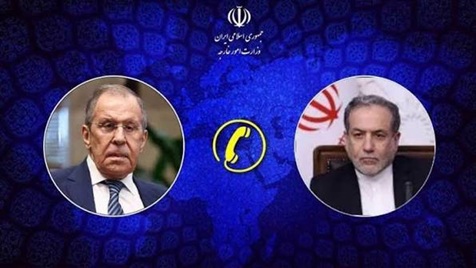
Iran has thanked Russia and China for blocking a United States-sponsored resolution at the United Nations Security Council aimed at extending the mandate of an expert panel monitoring international sanctions against Tehran.
The resolution was defeated on Thursday after Russia and China, both permanent members of the 15-member Security Council, voted against it, exercising their veto powers. Eleven members voted in favour, while two, including Pakistan, abstained.
The US-backed draft sought to extend the mandate of the Panel of Experts assisting the Security Council’s Iran Sanctions Committee for another year. The panel’s mandate was due to expire on September 26.
Iran has described the Western pressure over its nuclear programme and related UN measures as politically motivated. Tehran has also rejected the legal basis of efforts to revive sanctions through the so-called “snapback” mechanism associated with the 2015 Joint Comprehensive Plan of Action (JCPOA).
Russia and China have similarly disputed the legal basis for the renewed sanctions framework. During the Security Council proceedings, Moscow maintained that UN Security Council Resolution 2231, which endorsed the 2015 nuclear agreement, had expired in October 2025 and therefore argued that there was no longer a legal or procedural basis for the council’s consideration of the matter.
The dispute comes amid a renewed confrontation between Iran and Western powers over Tehran’s nuclear activities. Earlier this month, the International Atomic Energy Agency’s Board of Governors voted to report Iran to the Security Council over what Western governments described as failures to meet its nuclear safeguards obligations. Russia, China and Iran opposed that move, arguing that the process lacked a sound legal basis and risked politicising nuclear oversight.
Iran has maintained that its nuclear programme is peaceful and has argued that military attacks on its nuclear facilities have made normal international inspections difficult. The IAEA, however, has said it lost access to key Iranian nuclear sites following the attacks and has been unable to fully account for Tehran’s stockpile of enriched uranium.
The latest Security Council vote highlights the deep divisions among the permanent members over how to handle Iran’s nuclear programme and the wider conflict involving Tehran.
Western governments have argued that maintaining international monitoring is necessary to ensure compliance with nuclear-related obligations and to prevent sanctions evasion. Reuters reported that the United States criticised the end of the independent monitoring mechanism, warning that it could make it harder to monitor sanctions violations. Russia and China, meanwhile, have accused Western countries of politicising the Iran issue and have called for diplomatic engagement.
The disagreement also reflects the wider diplomatic split over the 2015 nuclear agreement. Britain, France and Germany triggered the mechanism that led to the reimposition of UN sanctions last year, arguing that Iran had failed to comply with its nuclear commitments. Tehran rejects that assessment.
The Security Council’s failure to renew the panel’s mandate means the independent monitoring mechanism will not continue in its proposed form. The outcome further exposes the divisions between Washington and its European allies on one side and Moscow and Beijing on the other over Iran’s nuclear programme, sanctions and the future of international diplomacy with Tehran.