

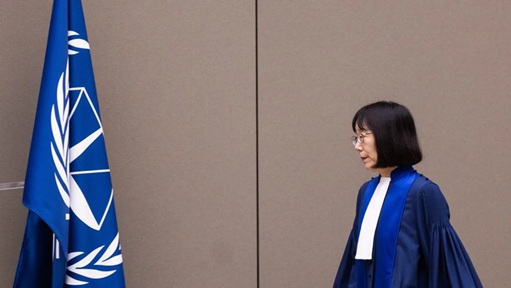
Japan has strongly criticised the United States’ decision to impose sanctions on International Criminal Court President Tomoko Akane, describing the measures against the Japanese judge as “very unfortunate” and reaffirming Tokyo’s support for the Hague-based tribunal.
The Japanese government issued its reaction on Wednesday, a day after the administration of US President Donald Trump announced sanctions against Akane and ICC senior trial lawyer Abdoulaye Seye of Senegal. The sanctions represent another escalation in Washington’s confrontation with the international court.
Japan’s Foreign Ministry said Tokyo has consistently supported the ICC’s role in prosecuting the most serious international crimes and promoting the rule of law.
“From this standpoint, the announced measures are very unfortunate,” Foreign Ministry Press Secretary Toshihiro Kitamura said in a statement.
The Japanese government’s response is significant because Japan is one of the ICC’s strongest supporters and has been a member of the court since 2007. Tokyo has also contributed financially and through the appointment of Japanese judges to the institution.
Washington announced the sanctions on Tuesday, targeting Akane and Seye over their involvement in ICC efforts to investigate or prosecute officials whose governments have not consented to the court’s jurisdiction.
US Secretary of State Marco Rubio accused the ICC of exceeding its mandate and undermining national sovereignty. The United States is not a party to the Rome Statute, the treaty that established the ICC, and Washington has consistently rejected the court’s jurisdiction over US citizens.
The sanctions freeze any assets belonging to the targeted officials that fall within US jurisdiction and restrict their access to the American financial system. The measures are part of a broader Trump administration campaign against the ICC.
The dispute has intensified over the ICC’s investigations into alleged crimes involving Israel and US personnel. Washington has strongly opposed the court’s actions concerning Israeli Prime Minister Benjamin Netanyahu and former Defence Minister Yoav Gallant, particularly after the ICC issued arrest warrants connected to the Gaza conflict.
The ICC has rejected the American sanctions, warning that targeting judicial officials for carrying out their legal responsibilities threatens the international legal order and the independence of the court.
For Japan, however, the issue extends beyond the individual case of Akane. Tokyo views the ICC as an important institution for international accountability and has repeatedly backed efforts to strengthen the international rule of law.
Japan’s position puts it in an increasingly delicate position with Washington. The two countries remain close strategic allies, particularly on security and economic issues in the Indo-Pacific, but Tokyo’s support for the ICC places it at odds with the Trump administration’s increasingly confrontational approach to the court.
The latest dispute also highlights a wider divide between the United States and several of its traditional allies over international institutions and the limits of international judicial authority.
The Netherlands, which hosts the ICC in The Hague, has also expressed opposition to the American sanctions, while European governments and human rights organisations have criticised Washington’s actions.
Japan’s condemnation is therefore likely to add diplomatic pressure on Washington as the dispute over the ICC expands beyond the court itself to relations between the United States and its allies.
For Akane, the sanctions mark a significant escalation in pressure against her leadership of the court. Yet Tokyo has made clear that it intends to continue supporting the ICC’s mission of pursuing accountability for genocide, war crimes and crimes against humanity.
The confrontation now presents a broader question for the international community: whether powerful states can be held accountable through international institutions when they reject the jurisdiction of those institutions.
Japan’s latest response suggests that, despite growing pressure on the ICC, Tokyo remains committed to preserving the court’s role in the international justice system.