

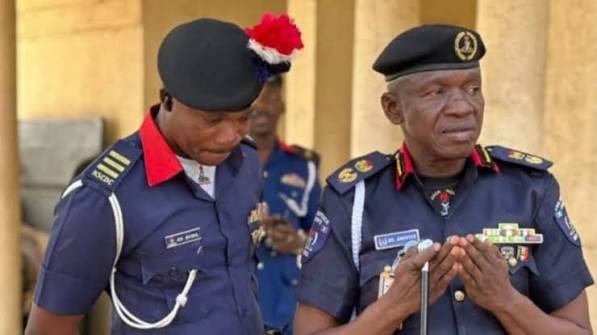
The Nigeria Security and Civil Defence Corps has assured families of the 37 suspected artisanal miners who died in its custody in Niger State that justice will be served, insisting that no personnel found culpable will be protected.
The Commandant-General of the NSCDC, Ahmed Audi, gave the assurance on Thursday during a condolence and courtesy visit to the Emir of Minna, Alhaji Umar Farouk Bahago, as well as families of the deceased and the family of a survivor of the incident.
Audi said the Corps would prioritise transparency and justice in dealing with the deaths, which occurred on September 17 after the miners were arrested during operations against suspected illegal mining in Niger State.
“The CG strongly condoled with the families and gave a firm assurance that the Corps will not shield anyone found culpable,” the NSCDC spokesman, Babawale Afolabi, said in a statement.
The NSCDC boss also confirmed that the Federal Government had constituted a high-powered investigative committee following a directive from the Presidency.
According to him, the Corps is cooperating fully with the investigation, while relevant personnel have been placed in protective custody to ensure they remain available to investigators.
The move comes amid growing public concern over the circumstances surrounding the deaths. The Federal Government’s independent committee, inaugurated by the Minister of Interior, Olubunmi Tunji-Ojo, has been mandated to establish the identities of the deceased, determine the immediate and remote causes of death and examine the circumstances surrounding their arrest and detention.
The panel is also expected to investigate the legality and conditions of the detention facility and determine whether relevant laws, detention procedures and human rights standards were followed.
Its mandate includes examining whether any detainees were tortured, subjected to inhumane treatment or denied medical attention, as well as investigating possible negligence or professional misconduct by officers involved in the operation.
The committee has already commenced work. Its medical team began investigations on Thursday to establish the cause, mechanism and manner of the deaths.
The secretary of the committee, Prof Isa Hayatu Chiroma (SAN), said the panel would visit relevant locations, engage government agencies and interview survivors, suspects, families, witnesses and other people with information that could assist the investigation.
The committee will also collect medical and other relevant records and has promised a thorough, fair, transparent and evidence-based inquiry. It has two weeks to complete its assignment and submit its report to the Minister of Interior.
The NSCDC had earlier taken disciplinary steps against personnel linked to the incident. Twenty-four officers were reported to have been placed in custody, including the suspended Niger State Commandant, Suberu Siyaka Aniviye. The personnel were transferred to the NSCDC national headquarters in Abuja for interrogation and administrative disciplinary proceedings and to make them available to the independent investigation.
Audi’s visit to Minna also included participation in the third- and seventh-day prayers for the deceased.
Responding on behalf of the traditional institution and affected families, the Emir of Minna expressed appreciation for the Commandant-General’s visit and the administrative measures taken following the deaths.
The Emir also commended the NSCDC for cooperating with the Presidential investigative committee.
Meanwhile, the exact circumstances and cause of the 37 deaths remain unresolved. The ongoing investigation is expected to examine competing accounts about the conditions in which the detainees were held and determine whether any official misconduct, negligence or other factors contributed to the deaths.
The Federal Government has warned that anyone found responsible will face appropriate disciplinary, administrative or legal action. The investigative committee has also been authorised to recommend compensation or other remedial measures for the families where applicable.
As the medical investigation and broader inquiry continue, the NSCDC’s latest assurance places responsibility for determining culpability on the evidence emerging from the ongoing investigations rather than on preliminary accounts of the incident.