

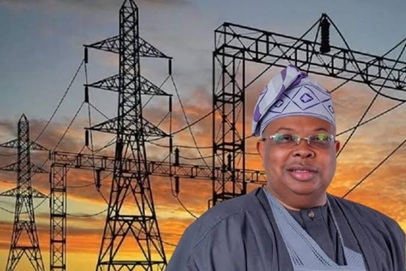
The Minister of Power, Joseph Tegbe, has said Nigeria’s electricity sector is facing interconnected challenges across the entire value chain, from gas supply and power generation to transmission, distribution and revenue collection.
Tegbe disclosed this on Monday in Abuja at a media parley marking his first 100 days in office, saying the problems confronting the sector could not be resolved simply by increasing electricity generation.
According to the minister, his assessment of the sector after assuming office showed weaknesses at virtually every stage of electricity production and delivery.
He said gas supply to power plants had been affected by damaged pipelines and commercial conditions that discouraged investment, while ageing generating equipment, deferred maintenance and stalled projects had prevented available generation capacity from reaching consumers.
Tegbe also disclosed that generating companies were receiving only about 27 per cent of their bills, a situation he said was undermining their ability to maintain power plants and settle obligations to gas suppliers.
The minister said the transmission network was also under pressure because of vandalised towers and lines, overstretched equipment and frequent system disturbances.
At the distribution end, Tegbe said distribution companies were recording aggregate technical, commercial and collection losses of between 30 and 40 per cent. He attributed the losses partly to inadequate metering, estimated billing, damaged infrastructure and poor payment discipline.
He further identified inflation, foreign exchange pressures, regulatory uncertainty and accumulated debts as additional constraints affecting the electricity market.
According to him, arrears owed by ministries, departments and agencies had exceeded N100bn, while broader liquidity problems continued to weaken confidence and investment in the sector.
Despite the financial difficulties, Tegbe ruled out an immediate increase in electricity tariffs, saying the Federal Government was concentrating on improving supply and strengthening the financial and physical foundations of the sector rather than imposing additional costs on consumers.
“Let me categorically state, and this is not a political statement, we have no plan to increase electricity tariffs,” the minister said.
The government has also been working to address the sector’s accumulated debts. The Guardian reported that the Federal Government had raised about N1.23tn towards reducing the backlog of liabilities in the electricity market. Tegbe also said generation and transmission had remained above 5,000 megawatts in recent weeks, compared with levels of about 3,700MW to 4,700MW before June.
Tegbe said the administration’s approach was focused on stabilising existing infrastructure, improving market discipline, addressing liquidity constraints and creating conditions for increased investment.
The minister, who assumed office in June, had earlier said that governance and coordination were among the major problems affecting the sector, stressing that no single agency or institution could resolve the challenges independently.
He said collaboration among agencies and other stakeholders would be necessary to achieve sustainable improvements in electricity supply.
The latest assessment comes amid continuing concerns over unreliable electricity supply, infrastructure deficits, accumulated market debts and the financial sustainability of Nigeria’s power market.
Tegbe said the government would continue working across the electricity value chain rather than treating generation, transmission and distribution as separate problems.
He acknowledged that the challenges had accumulated over several years, suggesting that addressing them would require coordinated reforms and sustained investment rather than a quick, single intervention.
For millions of households and businesses, the outcome of these efforts will ultimately be measured by the reliability, affordability and availability of electricity delivered to consumers.