

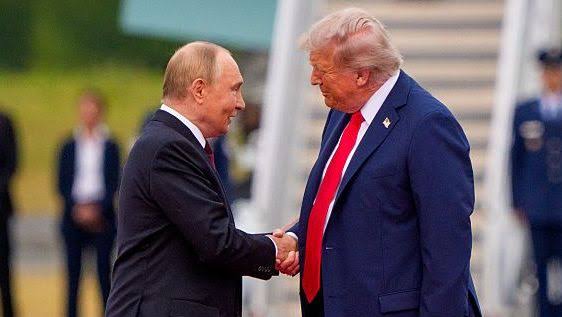
US lawmakers are preparing legislation to block President Donald Trump’s controversial agreement allowing Russian diesel to enter American and global markets, intensifying debate over fuel prices, national security and Washington’s support for Ukraine.
Republican Representative Brian Fitzpatrick of Pennsylvania announced plans to introduce the Ronald Reagan Peace Through Strength Act, which would seek to prevent purchases of Russian oil. Fitzpatrick, co-chair of the Congressional Ukraine Caucus, said he would pursue a House vote through a discharge petition, a procedure that can bring legislation to the floor if it receives sufficient support.
“We will be introducing bipartisan legislation to block any and all purchases of Russian oil,” Fitzpatrick wrote on social media, according to Radio Free Europe/Radio Liberty.
The proposed bill follows Trump’s announcement that Russia would supply more than 300,000 tonnes of diesel immediately, with additional deliveries expected in the coming months. The president has defended the arrangement as a way to ease elevated fuel costs for American consumers, farmers and transport operators.
However, critics argue that easing restrictions could provide Moscow with additional revenue while Russia continues its war against Ukraine. The deal has also raised questions about the administration’s authority to relax restrictions established under US sanctions policy.
Opposition is not limited to the House. A bipartisan group of six senators has urged the administration to reverse course, arguing that the decision conflicts with existing congressional legislation and was made without the consultation required by law. Republican Senator Thom Tillis has also questioned whether the move is lawful.
The legislation’s prospects remain uncertain. Fitzpatrick’s proposed discharge petition would require 218 signatures to force a vote, and the limited congressional calendar could complicate efforts to pass the measure.
The dispute reflects a broader policy challenge for Washington: balancing pressure on Russia over its invasion of Ukraine with the need to address high energy costs. Since Russia launched its full-scale invasion in February 2022, Western governments have imposed sanctions intended to restrict Moscow’s access to revenue and weaken its ability to finance the war.