

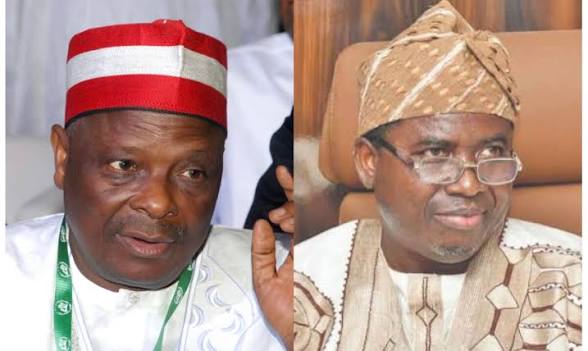
Nigeria Democratic Congress (NDC) vice-presidential candidate, Senator Rabiu Musa Kwankwaso, has issued a strong warning to the Independent National Electoral Commission (INEC) against any attempt to compromise the integrity of the 2027 general elections, following allegations of AI-generated photographs and suspicious identities in the commission’s preliminary voters’ register.
Kwankwaso expressed deep concern over reports of suspected artificial intelligence-generated photographs and questionable records reportedly discovered in the preliminary voters’ register recently published by INEC.
He warned that the allegations raise fundamental questions about the credibility of Nigeria’s voter registration system and the commission’s preparedness to conduct free, fair and credible elections in 2027.
According to him, the integrity of the voters’ register is central to the credibility of any democratic election, stressing that Nigerians must not be left in doubt about the authenticity of the records that will determine participation in the forthcoming electoral process.
The NDC vice-presidential candidate challenged INEC to provide clear and convincing explanations regarding how the suspicious photographs and questionable records found their way into the register.
He specifically demanded answers to critical questions, including whether the individuals associated with the records were genuinely registered voters, whether their identities were properly verified, and whether the alleged irregularities could have compromised the accuracy of the national voters’ register.
While acknowledging INEC’s decision to investigate the allegations, Kwankwaso insisted that Nigerians deserve more than routine assurances from the electoral commission.
He called for a thorough, transparent and independent investigation conducted outside INEC’s internal administrative structure, with the findings made public and anyone found culpable held accountable in accordance with the law.
Kwankwaso further demanded a comprehensive independent audit of the preliminary voters’ register, verification of questionable entries, investigation of possible duplicate or artificially created identities, and appropriate measures to correct irregularities without disenfranchising legitimate voters.
He maintained that the use of emerging technologies, particularly artificial intelligence, must never become a tool for manipulating Nigeria’s democratic process or creating opportunities for electoral fraud.
“Our democracy cannot afford any compromise in the integrity of the voter register. Every eligible Nigerian must have the right to vote, and every vote must count,” he warned.
### A Test of INEC’s Credibility Ahead of 2027
Kwankwaso’s intervention comes amid growing public concerns over the reliability of Nigeria’s electoral database and the safeguards being deployed by INEC ahead of the 2027 general elections.
The controversy presents an important credibility test for the electoral commission. Beyond publishing a preliminary register and announcing an investigation, INEC must demonstrate that its registration, verification and data-management systems are sufficiently robust to prevent fictitious identities, duplication and technological manipulation.
The commission must also recognise that public confidence cannot be secured through assurances alone. It requires verifiable evidence, independent scrutiny, transparency and accountability.
For millions of Nigerians preparing to exercise their democratic rights in 2027, the credibility of the election begins long before polling day. It begins with a trustworthy voters’ register.
The fundamental question is no longer simply whether INEC can organise an election, but whether Nigerians can have confidence that every name, every identity and every vote in the electoral process is genuine.
As the 2027 elections approach, Kwankwaso’s warning underscores the need for INEC to address these allegations decisively before they undermine public confidence in the entire electoral process.